Step 2
Ensure your outreach message is clear, kind and respectful. Don’t be afraid to mention that you’re a first-generation student, this context helps others understand your perspective and goals.
Consider the platform you’re using. Messages on LinkedIn can be more casual and conversational, while emails should use a formal and structured tone. If you don’t hear back in 5-7 days, don’t be afraid to send a brief, polite follow-up. Students and alumni are often busy, and your message may have just been missed. If you don’t hear back at all, don’t take it personally or get discouraged; many students and alumni are balancing heavy workloads and may not have the bandwidth to reply. Ensure to also be mindful of deadlines, especially during graduate application season, last-minute requests may be difficult to accommodate.
Below is an example from a student who reached out to me via LinkedIn. Email templates can be found below.
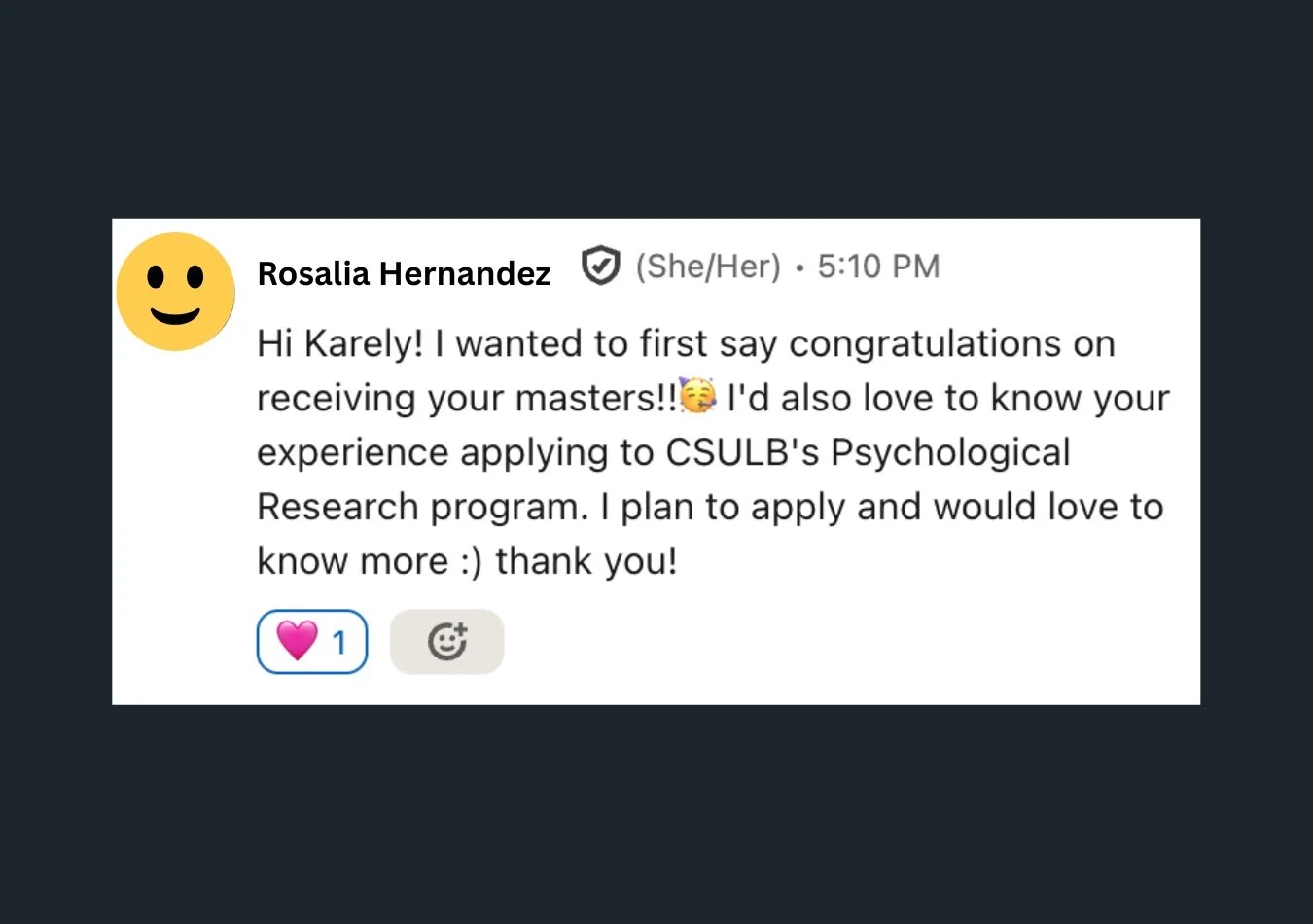
Example 1: Message to Current Student or Alumni
Subject: Prospective [Program Name] Student Interested in Learning About Your Experience
Hi [Name],
My name is [Your Name], and I’m a [your role- e.g., senior psychology major at x University/ first-generation student exploring grad programs].
I came across your profile and noticed that you’re part of (or graduated from) [Program Name] at [University]. I’d love to hear about your experience and any advice you have for someone considering this program.
If you’re open to it, I’d really appreciate 15-20 minutes to chat or connect over email. Thank you for your consideration, I look forward to hearing from you soon!
Best,
[Your Name]
Example 2: Follow-Up
Hi [Name],
I wanted to follow up on my previous message. I completely understand how busy things can get- if you have a few minutes to share your insights, I’d really appreciate it.
Thank you again for considering my request!
Best,
[Your Name]
When You Get a Response
Once someone replies, it’s important to make the process easy and convenient for them.
Respond Promptly: reply within 24 hours of receiving their email/message. This shows you value their time and are genuinely interested in connecting.
Be Proactive About Scheduling: Instead of leaving the planning open-ended, offer a few specific time options.
For example: Thank you so much for getting back to me! I’d love to connect. I’m available on [two or three time options], but I’m happy to adjust to what works best for you.
If they agree to meet, take initiative:
Offer to send a Zoom link and calendar invite to make it easy for them to join.
Confirm the date and time clearly in your email.
For example: Great, thank you! I’ll send a Zoom link for [date and time]. Looking forward to speaking with you!
Confirm Before the Meeting: Send a short confirmation message the day before.
For example: Hi [Name], I’m confirming our meeting for [time and date]. Here’s the Zoom link again: [link], I’m looking forward to connecting!
Taking these small steps shows professionalism, thoughtfulness and respect for their time- and makes it more likely they’ll want to stay in touch.